Borrowed Rope: How Leverage Turns Good Trades Into Account Killers
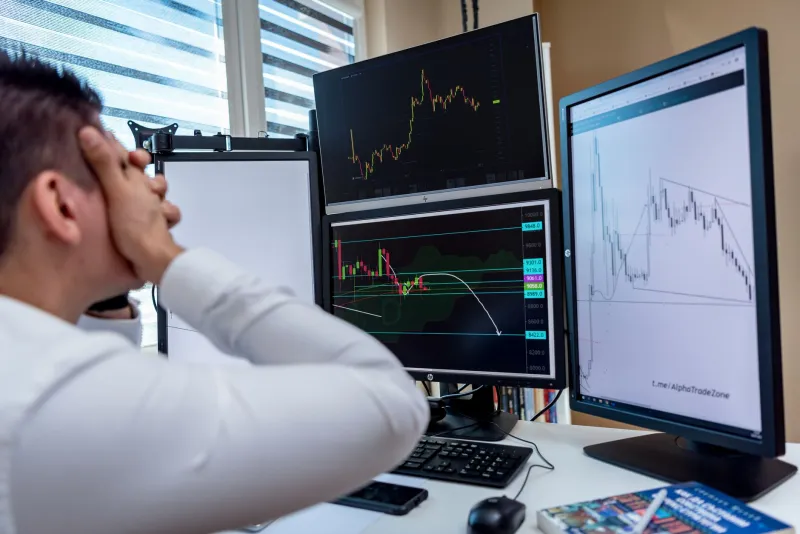
There's a particular kind of financial pain that comes not from being wrong about the market, but from being right in the wrong amount. Ask anyone who's blown up a futures account or watched a forex position margin-call them into oblivion — they'll often tell you the same thing: "I knew the direction. I just had too much on."
That's the leverage trap in a nutshell. And it's been quietly emptying trader accounts across America since the day brokers figured out they could offer 50:1 on currency pairs and call it a feature.
What Leverage Actually Does (Strip Away the Sales Pitch)
Brokers love to frame leverage as a tool for "maximizing your buying power." What they don't put in bold on the landing page is that it maximizes your losing power with equal enthusiasm.
Here's the naked math: trading a standard forex lot with 50:1 leverage means a 2% move against you wipes out your entire margin on that position. Two percent. In a market that can gap 1.5% on a single Fed statement, that's not a fringe scenario — that's a Tuesday.
Equity traders aren't immune either. Regulation T gives US retail traders 2:1 leverage on overnight positions and 4:1 intraday. Pattern day traders running near that 4:1 limit during a volatile open can find themselves down 25% of their account before the first hour of trading is done — on a position they felt genuinely confident about.
The math of drawdowns is brutal and asymmetric. Lose 25% and you need a 33% gain to get back to even. Lose 50% and you need a 100% gain. Lose 75% — which happens more than anyone wants to admit when leverage is involved — and you need a 300% return just to recover. The hole gets exponentially deeper the further you fall in.
The Psychology Behind the Oversize Bet
So why do traders keep reaching for more leverage than they should? This is where it gets genuinely interesting, and a little uncomfortable.
The most common driver is a phenomenon traders rarely admit to: conviction inflation. When your analysis feels airtight — when the chart setup is textbook, the fundamentals align, and three different indicators are flashing green — your brain quietly starts lobbying for a bigger position. The internal monologue sounds something like, "This one's different. I'm not guessing here, I actually know."
But markets don't grade on confidence. They don't care how many hours you spent on your thesis. And the cruel irony is that the trades you feel most certain about are often the ones where overleveraging does the most damage, because you're less likely to cut the position quickly when it moves against you. You believe in it. You hold. The loss compounds.
There's also the recovery trap — a pattern that shows up constantly in blown accounts. A trader takes a string of losses, account equity is down, and the psychological pressure to "get it back" starts distorting position sizing decisions. Instead of scaling down during a drawdown (which is what the math demands), they scale up, chasing the faster recovery that only bigger leverage can provide. This is how a manageable 15% drawdown becomes a catastrophic 60% drawdown inside of two weeks.
Real Accounts, Real Damage
Consider a scenario that plays out in trading communities constantly: a trader with a $30,000 account gets genuinely good at reading crude oil futures. Their directional calls are right more often than not — maybe 60% of the time, which is actually solid. But they're running three to four contracts on a $30K account, leverage well beyond what the position size math recommends.
One unexpected inventory report. A geopolitical headline at 2 AM. A gap open that blows through their mental stop before they can act. Suddenly they're down $11,000 on a single trade — more than a third of their account — on a commodity they understood and analyzed correctly in terms of direction over the prior weeks.
The trade wasn't the problem. The size was the problem.
This pattern repeats across asset classes and experience levels. The 2021 meme stock volatility wiped out retail accounts not because those traders were wrong that certain stocks were being squeezed — many of them were right. They were wrong about how much of their account to put at risk during a period of historic volatility.
Building a Leverage Framework That's Actually Honest
The standard advice — "only risk 1-2% per trade" — is correct but incomplete. It doesn't tell you how to translate that into actual leverage decisions. Here's a more grounded framework.
Start with your genuine pain threshold, not your theoretical one. Most traders say they can handle a 20% drawdown until they're living it at midnight watching futures tick against them. Before sizing any position, ask yourself: if this trade immediately goes to my maximum loss, can I sleep? Can I trade normally tomorrow? If the honest answer is no, the position is too big.
Work backwards from dollar risk, not percentage leverage. Instead of thinking "I'll use 10:1 leverage," think "I'm willing to lose $400 on this trade." Then calculate the position size that makes $400 your actual maximum loss at your stop level. Let the leverage ratio be a result of that math, not a starting point.
Treat volatility as a leverage multiplier. A 5:1 leverage ratio in a slow-moving large-cap stock is very different from 5:1 in a small-cap biotech or a volatile crypto pair. Adjust your effective position size based on the asset's average true range (ATR). Higher volatility means your effective leverage is already higher — don't add more on top of it.
Scale down in drawdowns, full stop. This one is non-negotiable and almost universally ignored. When your account is down 15% or more, cut your standard position size in half until you've recovered. It feels counterintuitive. It is also the single most effective way to prevent a bad run from becoming a catastrophic one.
The Uncomfortable Truth About "Safe" Leverage
Here's what the broker FAQ won't tell you: for most retail traders, the genuinely safe leverage ratio is embarrassingly conservative. We're talking 2:1 to 3:1 in most scenarios, and often effectively 1:1 — meaning just trading what you actually have — during periods of high uncertainty or personal drawdown.
That's not exciting. It doesn't make for a good "I turned $5,000 into $50,000 in six months" story. But it's also what keeps traders in the game long enough to actually get good.
Leverage isn't inherently evil. Used with genuine discipline and honest position sizing, it's a legitimate tool. But the market has a long memory for the traders who treated borrowed money like it was theirs to lose. The accounts that survive — the ones that compound quietly over years — are almost always the ones that learned to trade smaller than felt comfortable.
Strip away the excitement, and that's the real edge.