Mind the Gap: The Hidden Psychological Toll That's Draining Your Trading Account
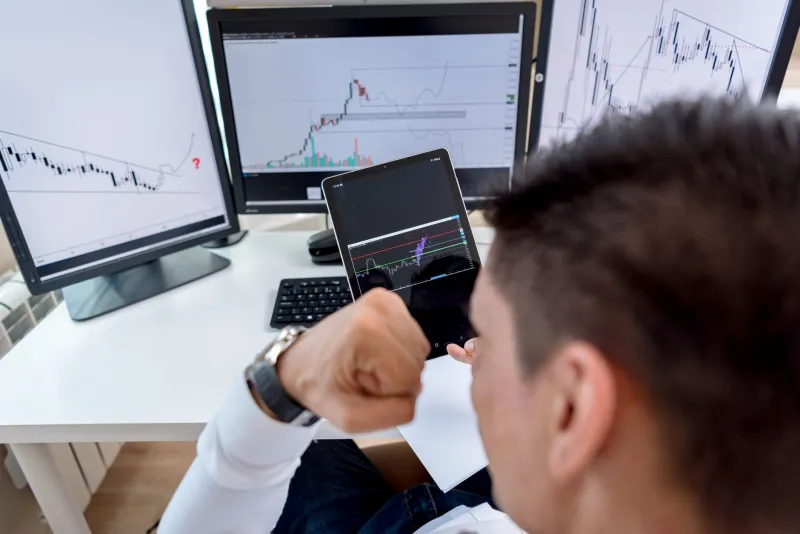
You've done the homework. You've backtested the setup, marked your entries and exits, and told yourself — with complete conviction — that you'll cut the position if it drops 2%. You're disciplined. You're ready.
Then the trade goes against you. And suddenly, 2% becomes 3%, becomes 5%, becomes a Friday afternoon prayer session that the market reverses before the close.
Sound familiar? That gap — the one between the trader you are in your head and the one you become when real dollars are bleeding — is where the real losses live. No spreadsheet captures it. No broker statement line-items it. But it's costing you more than commissions, slippage, or a bad earnings call ever will.
The Illusion of Rational Decision-Making
Here's something the financial industry doesn't love to advertise: humans are spectacularly bad at making decisions under pressure, and trading is basically a pressure cooker with a ticker tape attached.
Researchers in behavioral finance — people like Daniel Kahneman and Amos Tversky — spent decades documenting what traders experience every session. Loss aversion, for starters, tells us that the psychological pain of losing $500 is roughly twice as powerful as the pleasure of gaining the same amount. That asymmetry alone explains why traders hold losers too long and sell winners too early. It's not stupidity. It's wiring.
The problem is that most trading education focuses on what to do, not on why you won't do it when it matters most. You can have the cleanest setup in the world and still blow it because your nervous system is running a completely different program the moment your P&L turns red.
Fear Doesn't Announce Itself
One of the sneakiest things about emotional trading is that it rarely feels emotional in the moment. It feels logical.
When you move your stop loss because "the chart structure has changed," that might be genuine analysis. Or it might be fear dressed up in technical language. When you add to a losing position because you're "averaging down into value," that might be a sound strategy. Or it might be ego refusing to admit a mistake.
The tell? Ask yourself this: Would I be making this exact decision if I had no position on?
If the honest answer is no — if you're changing the rules mid-trade because of what's happening to your account balance rather than what's happening on the chart — you're not trading anymore. You're reacting. And reactive trading is where accounts go to die.
Greed's More Subtle Cousin: Overconfidence
Fear gets all the bad press, but greed's quieter cousin — overconfidence — does just as much damage, often in bull markets and winning streaks.
After a few strong trades, something shifts. Position sizes creep up. You start skipping confirmation signals because you "know" how this one plays out. You're not being reckless; you're being experienced. At least, that's the story.
What's actually happening is that your brain is pattern-matching recent wins onto new situations that may not share the same conditions. The S&P had a great run, you caught a few moves, and now your risk management is running on vibes instead of rules. This is how disciplined traders blow up — not on their worst days, but on the overconfident days that follow their best ones.
Building an Emotional Early Warning System
So how do you actually get ahead of this? Not by becoming a robot — that's neither possible nor the goal. But by creating a personal early warning system that catches emotional drift before it becomes a blown account.
Start with a pre-trade checklist that includes your mental state. Before you enter any position, rate your emotional temperature on a simple 1-10 scale. Are you anxious about something unrelated to trading? Did you just take a painful loss? Are you feeling unusually euphoric? Any extreme reading — high or low — is a yellow flag worth acknowledging.
Create a "if-then" decision tree before the trade opens. Not during, not after — before. Write it down: If the stock drops to X, I will do Y. If it hits my target, I will do Z. The goal is to make your decisions when you're calm so your future, stressed-out self doesn't have to improvise.
Track your emotional state alongside your trades. Most traders journal price levels and setups. Almost none journal how they felt during the trade. Start doing both. Over time, you'll start seeing patterns — maybe you consistently overtrade on Mondays, or you always second-guess yourself after a gap down open. The data doesn't lie.
Build in mandatory pause points. If you're down a set dollar amount in a session, stop. Walk away. Eat something. The market will be there tomorrow. The trader who survives to trade another day is the one who recognizes when their edge has been replaced by emotion.
The Cost You Can't Quantify (But Should Try)
Here's a thought experiment: go back through your last 20 trades and flag every one where you deviated from your original plan. Moved a stop. Sized up impulsively. Held past your exit. Bailed early because you were nervous.
Now calculate what those trades would have returned if you'd executed exactly as planned.
For most traders, that number is uncomfortable. Sometimes it's the difference between a losing month and a breakeven one. Sometimes it's bigger. The emotional tax is real, it compounds, and it's entirely invisible until you do the forensics.
This isn't about beating yourself up. It's about treating the psychological side of trading with the same rigor you bring to technical analysis. You wouldn't enter a trade without knowing your risk/reward ratio. So why would you enter a session without knowing your emotional risk?
Trading Naked Means Trading Honestly
The whole premise of this site is stripping away the noise and seeing markets — and ourselves — clearly. And the most uncomfortable truth in trading isn't about indicators or brokers or market makers. It's that the person most likely to blow up your account is the one reading this article.
Not because you're a bad trader. But because you're human, and the market is specifically designed to exploit every human tendency you have.
Closing the gap between who you are on paper and who you are under pressure isn't a one-time fix. It's a practice — the same way reading charts is a practice. The traders who last aren't the ones who never feel fear or greed. They're the ones who've learned to recognize those feelings fast enough to not let them drive.
That's the work. And it starts with being honest about the gap.