Your Backtest Lied to You: The Ugly Truth Behind 'Proven' Trading Strategies
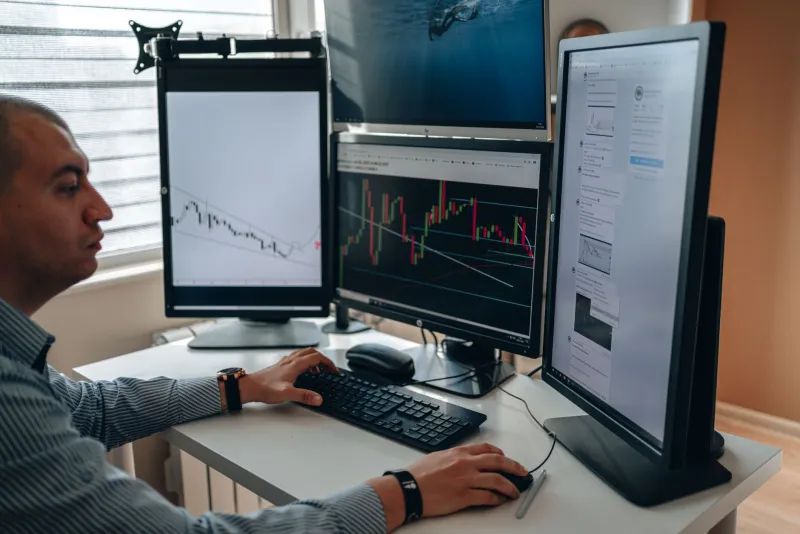
You spent weeks on it. Tweaked the parameters, ran it across five years of price data, watched that equity curve climb like a ski slope in January. The Sharpe ratio looked great. Max drawdown? Totally manageable. You felt like you'd cracked the code.
Then you went live — and the strategy fell apart in the first two weeks.
If that story sounds familiar, you're not alone. Backtesting failure is one of the most common and least talked-about gut-punches in retail trading. Traders pour enormous energy into historical testing only to discover that their "proven" edge evaporates the moment real capital enters the picture. And the frustrating part? The backtest wasn't wrong because of bad data. It was wrong because of how you used it.
Let's get into it.
The Curve-Fitting Trap Nobody Warns You About
Curve-fitting is the silent killer of backtested strategies. It happens when you unconsciously — or sometimes very consciously — optimize your parameters so tightly around historical data that the strategy essentially memorizes the past instead of identifying a repeatable edge.
Picture this: you're testing a moving average crossover system. You start with a 10/50 combo. Results are okay but not spectacular. You try 12/48. Better. Then 13/47. Even better. Before long, you've run through dozens of combinations and landed on something that looks incredible on the chart — because you've essentially built a strategy that's perfectly calibrated to one specific slice of market history.
The problem is that markets don't repeat themselves precisely. The conditions that made your 13/47 crossover sing in 2019 aren't guaranteed to show up again. When the market shifts — and it always shifts — your over-fitted strategy has no idea what to do.
A good rule of thumb: if your strategy only works with very specific, narrow parameters, it probably doesn't work at all. Robust strategies tend to perform reasonably well across a range of parameter values, not just one magic combination.
Look-Ahead Bias: Cheating Without Knowing It
Look-ahead bias is exactly what it sounds like — your backtest is using information that wouldn't have been available to you at the time of the trade. And it's sneakier than most people realize.
One of the most common examples involves daily candle data. Say your strategy triggers a buy when the day's closing price crosses above a certain level. In a poorly constructed backtest, the system might execute that trade at the closing price — which means it's technically buying on information that only exists after the candle closes. In real trading, you'd have entered at a slightly different price, or potentially missed the signal altogether.
Another version shows up with earnings data, economic reports, or indicator calculations that use end-of-period values in ways that wouldn't be accessible in real time. The result is a backtest that performs beautifully because it's essentially seen the future. Strip that advantage away, and the strategy collapses.
If you're building your own backtests, audit every single signal and execution point. Ask yourself honestly: would I have known this at the exact moment the trade was placed? If the answer is anything less than a clear yes, you've got a problem.
Slippage, Spreads, and the Market That Doesn't Care About Your Backtest
Here's something most backtesting platforms get terribly wrong: they assume you can always get filled at the price you want, exactly when you want it.
Real markets don't work that way.
Slippage — the difference between your expected entry price and your actual fill — can be devastating for strategies that depend on precise entries. A scalping system that looks profitable after transaction costs in a backtest might turn negative once you account for the half-point of slippage you consistently eat on fast-moving trades. The same goes for bid-ask spreads, which widen during volatile conditions, after-hours gaps, and around major news events.
If your strategy trades frequently or relies on tight stops, slippage isn't a rounding error — it's a core variable. Model it aggressively. Add more than you think you need. If the strategy still holds up, great. If it falls apart when you apply realistic friction, you've just saved yourself a lot of money.
The Emotional Variable Backtests Can't Measure
Here's the part that no software can simulate: you.
Your backtest runs without hesitation. It doesn't second-guess a signal because the news is scary. It doesn't skip a trade because you had a bad week. It doesn't move a stop loss because you can't stomach watching the position go against you.
But you do all of those things. And those deviations — even small ones — compound over time into results that look nothing like your historical test.
This is where backtesting and trading psychology crash into each other. A strategy that requires you to hold through 20% drawdowns might be theoretically sound, but if you bail at 8%, you're not actually trading the strategy. You're trading a broken version of it. And broken strategies don't produce the returns you modeled.
Before you go live with anything, ask yourself honestly whether you can execute the strategy as designed — not just mechanically, but emotionally. If the answer is no, either adjust the strategy or adjust your expectations.
How to Actually Stress-Test a Strategy
So what does honest backtesting look like? A few things worth building into your process:
Walk-forward testing. Instead of optimizing on your full dataset, optimize on one portion and test on data the system has never seen. If performance holds up out-of-sample, that's a meaningful signal. If it collapses, you've got curve-fitting on your hands.
Monte Carlo simulation. Randomize the order of your historical trades and run thousands of simulations. This gives you a realistic distribution of possible outcomes — including the ugly ones — rather than a single rosy equity curve.
Worst-case scenario modeling. Deliberately break your strategy. Apply it to market regimes it wasn't designed for — high volatility, low volatility, trending, choppy. If it completely falls apart in any environment, you need to know that before you're trading live through a regime shift.
Paper trading with discipline. Forward-test the strategy in real market conditions, but without real money, for a meaningful period — not two weeks, but two to three months minimum. Treat every signal seriously. This is the closest thing to live trading without the financial risk.
The Naked Truth
Backtesting is a tool, not a guarantee. The equity curve you built in your testing software represents a best-case version of a strategy performing in conditions it was specifically tailored to. Real markets are messier, faster, and emotionally taxing in ways no historical dataset can capture.
That doesn't mean backtesting is useless — it's an essential part of the process. But it's the beginning of due diligence, not the end of it. Treat your backtest results with healthy skepticism, stress-test aggressively, and never mistake a pretty chart for a proven edge.
The traders who survive long enough to actually make money are the ones who go into live trading knowing their strategy has been genuinely challenged — not just admired.