The Execution Tax: How Real-World Trading Quietly Steals Your Edge Before You Even Know It's Gone
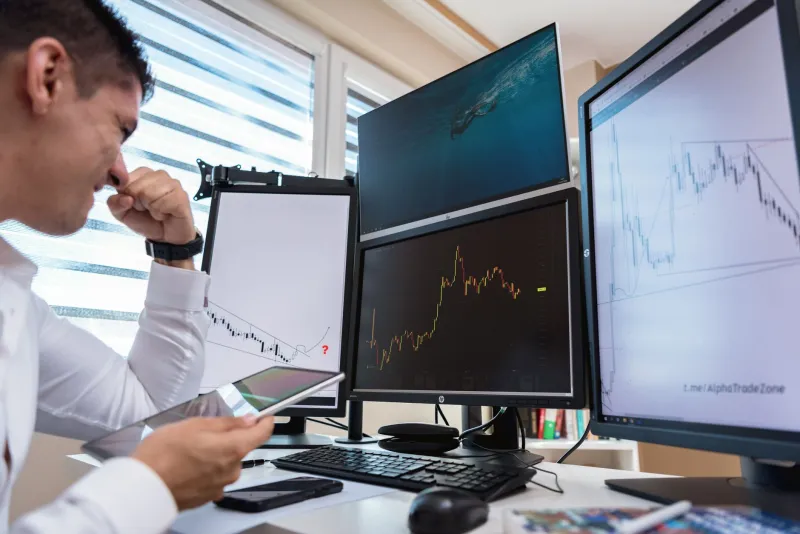
You ran the backtest. You stress-tested it. You checked the drawdowns, the Sharpe ratio, the win rate. Everything looked clean. So you went live — and almost immediately, the returns started coming in softer than expected. Not catastrophically worse. Just... off. A little thin. Like someone was skimming a percentage off the top of every single trade.
Someone was. You just didn't realize it.
Welcome to what we call the execution tax — the invisible drag that sits between your theoretical edge and your actual account balance. It's not dramatic. It doesn't blow up your account in a single trade. It just quietly erodes everything, one filled order at a time.
What Backtesting Actually Assumes (And Why That's a Problem)
Most backtesting software — from basic retail platforms to more sophisticated tools — operates on a dangerously optimistic assumption: that you can buy at the price you see and sell at the price you see. Clean fills. Instant execution. No friction.
In the real world, that assumption falls apart the second you actually place a trade.
Historical data shows you the closing price, the bar open, or some midpoint. It does not show you the bid-ask spread at the exact millisecond your order hit the market. It doesn't account for the fact that the moment you send a large market order, the price shifts against you — sometimes by a little, sometimes by a lot. And it definitely doesn't capture what happens when you're trying to exit a losing trade at 9:31 AM on a volatile Monday morning while everyone else is doing the same thing.
This gap between assumption and reality has a name: slippage. And it's the single most underestimated cost in retail trading.
Slippage Isn't Just a Number — It's a Moving Target
Here's what makes slippage particularly nasty: it's not consistent. It changes based on what's happening in the market at that exact moment.
In calm conditions — low volatility, high liquidity, mid-session trading — slippage on a common stock or major futures contract might be minimal. Maybe a tick or two. Annoying but manageable.
But try executing that same strategy during an earnings release. Or during a Federal Reserve announcement. Or on a day when some geopolitical event has everyone scrambling. Suddenly, your "minimal" slippage multiplies. Your limit orders don't fill. Your market orders fill — just nowhere near where you expected.
A strategy that looks like it generates 1.2% per trade in backtesting might realistically produce 0.6% once you apply real-world fills. That's not a minor adjustment. That's your entire edge, halved — before you've even accounted for commissions.
The Commissions Conversation Nobody Wants to Have
Brokers love to advertise "commission-free" trading. And technically, for certain retail accounts trading stocks, that's true. But commission-free doesn't mean cost-free.
Payment for order flow — the mechanism that allows brokers to offer zero-commission trades — means your orders are being routed to market makers who profit from the spread. You're not paying a visible fee. You're just getting slightly worse fills, consistently, on almost every trade. Same execution tax. Different invoice.
For futures traders, options traders, or anyone dealing in less liquid instruments, explicit commissions are still very much a reality. And they compound in ways that feel abstract until you actually run the math.
Let's say your strategy averages 40 trades per month. You're paying $1.50 per side on a futures contract, so $3 round-trip. That's $120 a month in commissions alone. If your average account size is $25,000, you need to generate a 0.48% return every single month just to break even on commissions — before slippage, before taxes, before any other friction. That's not nothing.
Market Impact: The Problem That Scales Against You
Here's the cruel irony of trading success: the better your strategy performs, the more capital you deploy — and the more capital you deploy, the worse your execution gets.
This is market impact. When you're trading small size, you're a rounding error to the market. You slip in and out without disturbing anything. But as your position size grows, your orders start moving prices. You become the reason slippage exists for the next person.
Institutional traders deal with this constantly. They break large orders into smaller chunks, use algorithmic execution, trade over extended timeframes — all to minimize the footprint of their activity. Retail traders rarely think about this until they've scaled up and suddenly noticed their fill quality has degraded significantly.
If your backtest was built on small-size trades and you're now trading ten times the size, your historical results are essentially fiction.
Order Type Matters More Than Most Traders Realize
One of the fastest ways to reduce your execution tax is to get serious about order types — and understand exactly what you're sacrificing with each one.
Market orders guarantee a fill. They do not guarantee a price. In liquid markets during normal hours, that's usually fine. In thin markets or volatile conditions, a market order is basically an invitation for the market to charge you whatever it wants.
Limit orders give you price control but introduce execution risk. Your order might not fill at all, meaning you miss the trade entirely. Or it partially fills, leaving you with a position that doesn't match your intended size and risk profile.
Stop orders — especially stop-market orders — are particularly vulnerable to slippage. During fast-moving markets, your stop triggers and your fill comes in significantly worse than the stop price. You planned to exit at $50. You exited at $49.12. On 500 shares, that's $440 you didn't model.
None of this means you should avoid these order types. It means you should understand their real costs and factor them into your strategy's actual performance expectations.
Closing the Gap Between Theory and Reality
So what do you actually do with all this?
First, stress-test your backtest with realistic execution assumptions. Add a slippage buffer to every entry and exit. A conservative starting point for most liquid instruments is half the average bid-ask spread per side. For less liquid names, go wider.
Second, track your actual fills obsessively when you go live. Compare them to your expected entry prices. Build a real picture of what your strategy costs to execute — not what it costs in theory.
Third, be honest about whether your edge survives the friction. Some strategies look great on paper and simply don't work in practice because the execution costs consume the alpha entirely. Better to discover that in a small live test than after six months of full-size trading.
The market doesn't care how good your backtest looked. It only cares what happens when real money meets real execution. That gap — between the price you saw and the price you got — is where most retail traders quietly lose the game they thought they were winning.
Trading naked means seeing that gap for exactly what it is. Not pretending it doesn't exist. Not hoping it'll average out. Just building it into your math from day one, and only trading strategies that still make sense after the execution tax has taken its cut.