Free Money, Fine Print: The Five Things 'Zero Commission' Actually Costs You

Photo: Ministry of Information and Broadcasting, GODL-India, via Wikimedia Commons
You know the deal by now: zero commissions, fractional shares, instant deposits, a confetti animation when you make your first trade. It's the greatest gift in the history of retail investing — or it's a business model so good that every broker in America copied it within two years.
Free platforms aren't free. They're just priced in ways you don't see on the receipt. Here are five of them.
Lie #1: 'We Don't Charge You — We Charge For You'
Payment for order flow (PFOF) is the engine under most zero-commission equity trading. Your broker routes your order to a wholesale market maker — think Citadel Securities or Virtu — who pays a fraction of a penny per share for the privilege of filling it. The broker pockets the fee. You get 'free' trading.
The cost: those wholesalers profit from the spread, and your marketable order often arrives after the market has already moved in response to broader flow. It's a small tax — studies put it somewhere between trivial and meaningful depending on order size and volatility — but it's a tax you pay on every single trade, invisibly.
Your defense: Use limit orders. A resting limit order isn't being 'wholesaled' the same way an aggressive market order is, and it stops you from paying the spread twice — once to the market maker, once to your own impatience.
Lie #2: 'Market Order' Is the Default Because It's Good for You
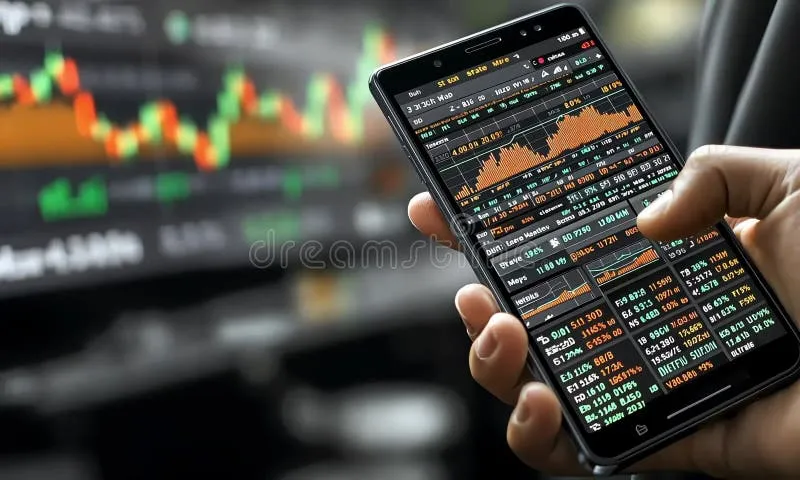
Open most free apps and the buy button is one tap. What order type is underneath? Market. Always market.
Market orders guarantee a fill and guarantee you pay the spread — plus slippage in fast markets. The default isn't set that way for your convenience. It's set that way because instant fills make the app feel magical, and instant fills at market prices maximize the flow the broker can monetize. A limit order requires you to think about price. The platform would rather you didn't.
Your defense: Change the default. Every order, every time, ask yourself: at what price am I willing to do this business? If you can't answer, you don't have a trade — you have an itch.
Lie #3: The Notifications Are for Your Benefit
"Tesla is on the move!" "Your stock is up 3%!" "See what traders are buying right now!"
Every push notification is a behavioral trigger engineered to reopen the app, because app opens lead to trades and trades lead to PFOF revenue. This is the same playbook casinos use — variable rewards, urgency, social proof — pointed at your brokerage account. Notice that the notifications never say "nothing is happening, do nothing."
Your defense: Turn them all off. If a position needs intraday babysitting, your stop should be doing the work, not your amygdala.
Lie #4: The Data on Your Screen Is Neutral
Free platforms curate what you see: trending lists, most-active tables, 'movers,' social feeds of what other users are buying. None of it is a lie, exactly. But it's a selection chosen to generate activity, not understanding. Trending lists skew toward volatile, heavily promoted names — precisely the stocks where retail flow is most profitable to intermediate.
Meanwhile, the data that would actually inform decisions — options flow, short interest, real-time depth of book — sits behind a paywall or doesn't exist on the platform at all.
Your defense: Treat every 'movers' list as a marketing section, not a research section. Get your market data from somewhere that isn't also your counterparty's marketing department.
Lie #5: 'Free' Applies Only to the Trades They Want You to Make
Look closely at what's free and what isn't: equities and basic options — free. Margin? That's often double-digit APR. Extended-hours access? Sometimes restricted. Better execution venues? Not on the menu. Instant transfers, tax tools, real-time data — tiered, gated, or subscription.
The free stuff is free because it generates flow. The stuff that protects you — good fills, honest data, low margin rates — is where the paywall lives.
Your defense: Price your broker the way you'd price any vendor. Add up margin interest, data subscriptions, and your estimated execution cost per trade. Then compare. The 'free' platform is frequently the expensive one.
The Honest Summary
None of this means zero-commission brokers are a scam. For a buy-and-hold investor making occasional limit orders, they're genuinely excellent. The problem is that the business model is optimized for the opposite of buy-and-hold: frequent, impulsive, market-order trading by people watching curated lists on a notification-driven app.
The platform is free. The behavior it's built to produce is not. Trade like you know that — because now you do.